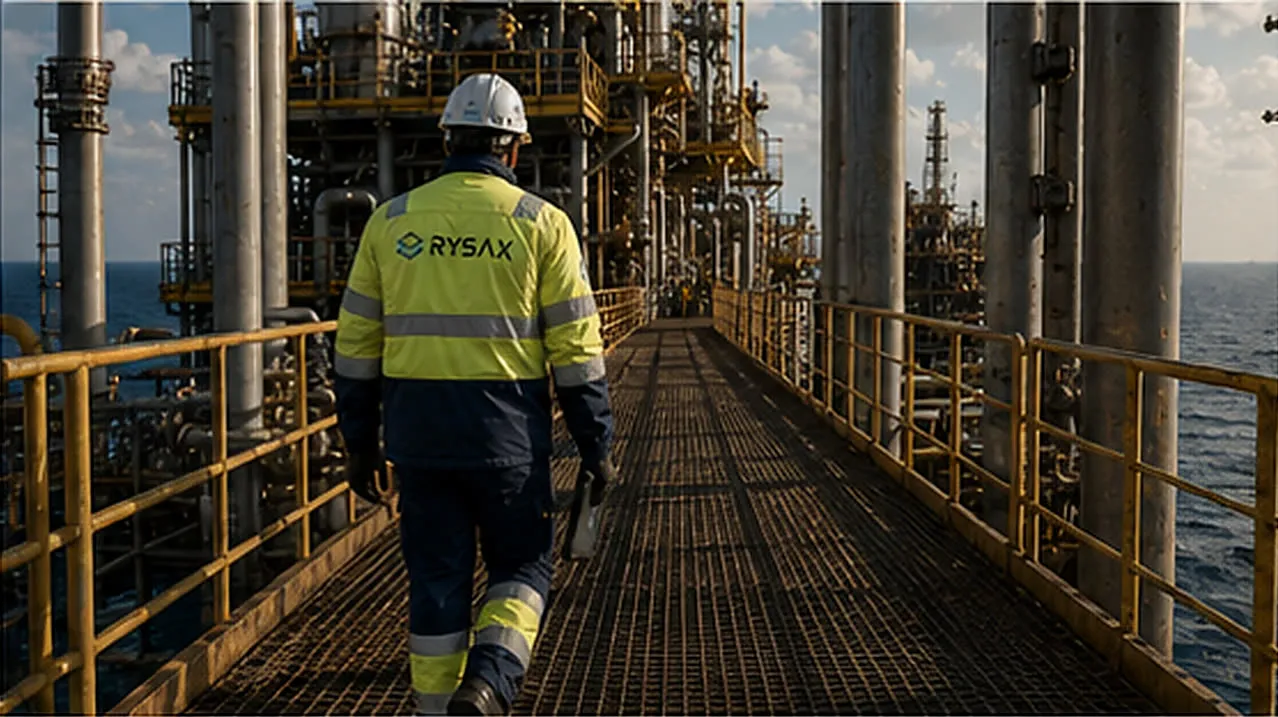
A trial built to help you make an informed decision, not a demo.
A defined area of your site, your inspectors doing their real work on Vectro 3D, and at the end: a clean go or no-go backed by a business case built on your own data. Everything the trial produces is yours to keep: the 3D model of the area, the inspection records, and the numbers.
Demos create interest. At Rysax, we create evidence.
A demo shows you what Vectro 3D can do. It cannot show you what Vectro 3D does to your inspection workflow, your reporting backlog, and your team's week, because that evidence only exists when your inspectors run real work on it, in your unit, against your current process.
That is what a Trial project with Rysax is: a scoped, structured project with defined success criteria, real operating conditions, and at the end, the evidence to make an informed decision. Both sides invest, both sides learn, and agree on numbers that came from your own operation.
Three phases. One informed decision.
Phase 1, Proposal.
Together, we define the pilot area and agree on success criteria, so the trial is judged against your goals, not our slides. You know exactly what “worth it” will mean before we start.
Phase 2, Realization.
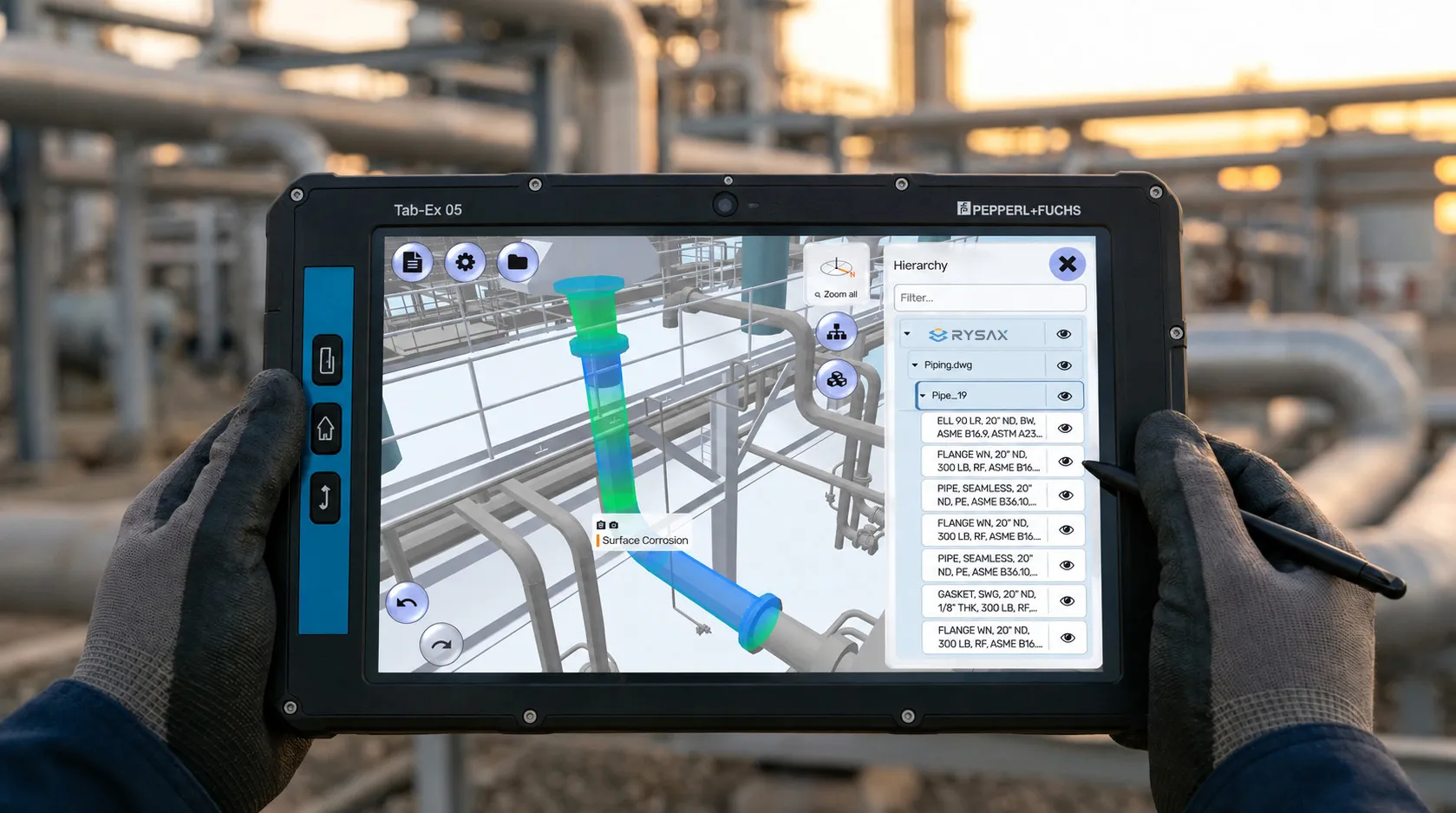
Stakeholders aligned, permits and access sorted, infrastructure readiness checked, project plan approved. Our team scans the pilot area on-site over a couple of days and builds a 3D model within two weeks, scoped for inspection. Vectro 3D is installed and configured, field-ready devices provided if you need them, and your inspectors are trained hands-on. Then go-live: your team runs its actual inspection workload on the platform, in live operating conditions, with dedicated hypercare support and weekly status meetings throughout.
Phase 3, Value.
While your team works, we measure. The trial closes with a gap analysis of your current inspection workflow, a business case with ROI jointly built on real usage data, an executive presentation to your stakeholders, and a clear go/no-go recommendation.
Timeline (typical trial):
- Week 1: laser scanning of the pilot area, on-site
- Week 2: virtual tour delivered, your team already exploring the area from a desk
- Week 3: 3D model ready,
- Week 4: Vectro 3D configured, inspectors trained, go-live
The business case and the go/no-go decision follow the live-use period agreed upon at kickoff.
Yours, whatever you decide.
- The as-built 3D model of the pilot area, in usable formats, scoped for inspection and ready to grow into anything else you build on reality
- Every inspection record, finding, and report your team produced during the trial
- A gap analysis of your current inspection workflow, on paper, with numbers
- A business case with ROI built on your own usage data, not on a vendor's benchmark
- Trained inspectors who have already worked on the platform
- A go or no-go recommendation you can defend in any budget meeting
If the answer is “go”, the program continues without starting over. If it is no-go, you still walk away with more asset documentation and process clarity than most paid consulting engagements deliver.

Honest scope, both directions.
A trial that produces real evidence requires three things from your side.
- A defined pilot area with timely access and pre-approved permits.
- Two key users with dedicated time for training and live use.
- Sufficient real inspection workload in the pilot area during the trial period to generate meaningful data.
We put that in the plan at kickoff, because a trial starved of real work proves nothing, and we would rather tell you that on day one.
Frequently asked questions
What if we already have a 3D model of the area?
Even better: we import it, verify it against reality, and the trial moves faster. The go-live can be done in the first week. The scanning and modeling phase exists for sites that need it.
Is this a pilot with a sandbox, or real work?
Real work. Your inspectors run their actual inspection workload on Vectro 3D, in live operating conditions. Sandboxes produce opinions; operations produce evidence.
Who defines what success means?
You do, with us. Success criteria are agreed in writing, and the final business case is measured against them.
What does the Trial Project cost?
A fixed fee, scoped to the pilot area, defined before you commit. No prices on this page because no two sites are alike; bring a real area, and we will scope it in days. What we can promise here: no open-ended costs, and everything the trial produces stays yours.
What happens if we decide not to continue?
You stop using Vectro 3D, but you keep the 3D model and the business case, in case you want to revisit it at another time.
How much of our team's time does it take?
At least two key users, part-time for about 3 weeks.
Can the trial include our report formats and system integrations?
The trial runs on the standard configuration to keep it fast and comparable; report layout tailoring and integrations (if needed) are scoped for the full deployment.
Bring an area. Leave with an informed decision.
Talk to a specialist, pick the pilot area together, and get a scoped Trial Project proposal: timeline, success criteria, fixed fee. Real people, real inspection experience. No chatbots.