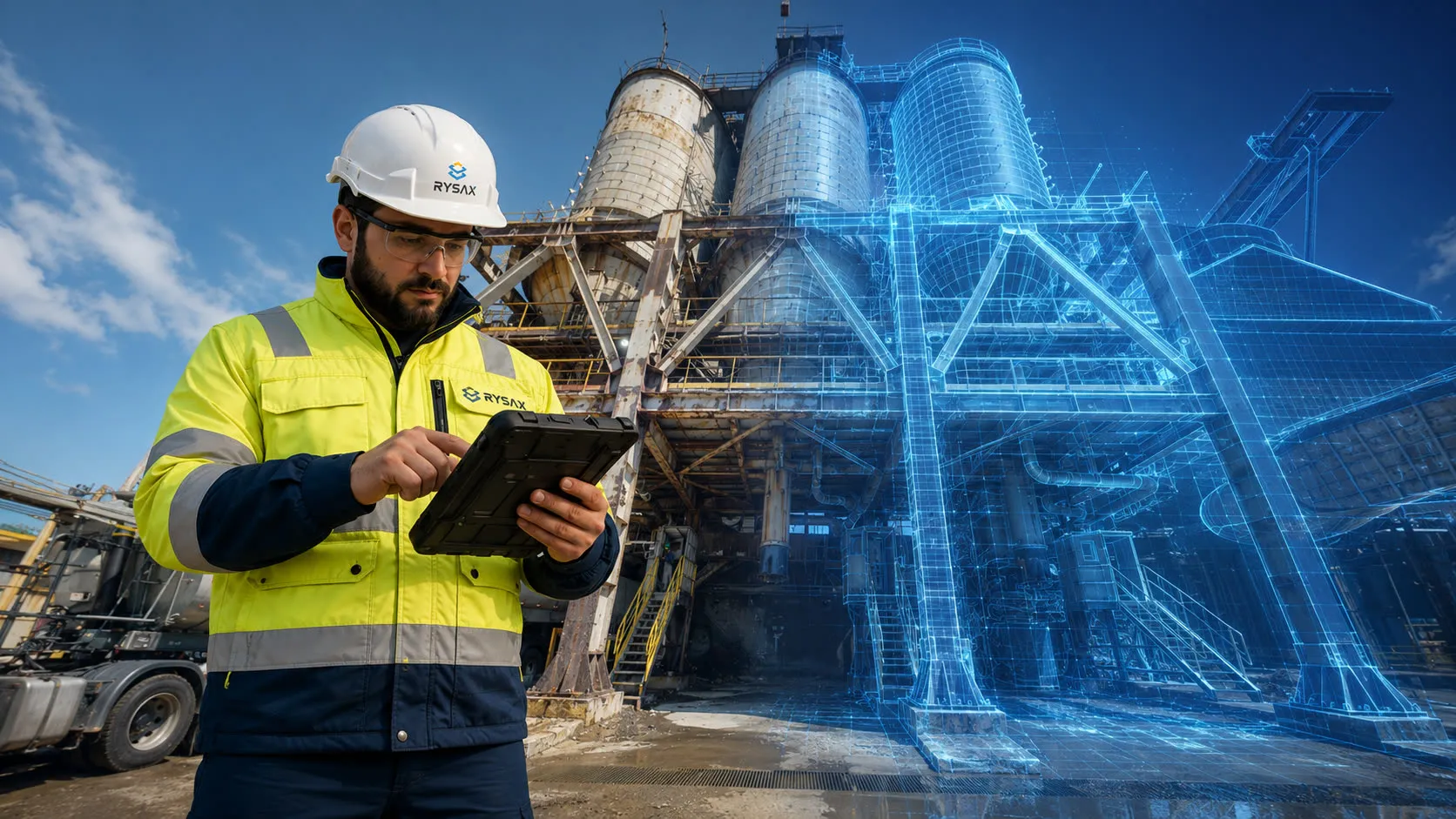
Your coating budget starts with an estimate. Then everyone treats that number as if it were true.
PhotoCoat replaces estimation with reliable measurement: surface areas taken from the asset's geometry rather than from a tape measure; condition graded against standards and supported by artificial intelligence; execution recorded as it happens, with an auditable trail; and a history per component, so next year's number starts from a record instead of starting from an estimate.
The number your budget starts from is a judgment call.
Here is how that number usually gets made. Every step below is documented, and the evidence behind each one is in a separate piece.
Condition is judged by eye.
Unless it is graded against a standard, coating condition is one professional's opinion. Where the spread has actually been measured, two competent inspectors looking at the same steel can disagree by enough to move a budget.
Two grading scales are in use: Corrosion and Rusting grades.
And they do not mean the same thing. One describes bare steel, either before it was ever coated or after an old coating has been stripped off. The other describes how far an existing coating has broken down. When your inspector reports in one and your contractor reports in the other, the argument is about definitions before it is about steel.
Area is estimated, not measured.
Somebody produces a square footage for next year without measuring it, and that number then sets the contract, the access plan and the shutdown window.
The treatment decision is taken before the test that decides it.
Spot repair, overcoating, and full removal and recoat are three different jobs at three very different costs. Which one a component needs turns on whether the existing film will hold a new system, and that is answered by testing on the asset, not by a rust percentage.
The surrounding cost keeps rising.
Containment and environmental compliance have pushed maintenance painting costs up steeply over the past decade. When the cost of doing the work escalates like that, a scope carrying an unmeasured margin stops being a rounding error.
The budget gets cut, and nobody records what was deferred.
Deferral does not buy you the same job later, it moves the component up the cost ladder. Because what was deferred is rarely recorded together with its condition, next year the conversation starts from zero again.
The record that would settle any of this does not exist.
Dry film thickness conformance is often mistaken for condition data. It is a contract acceptance instrument, it samples a fraction of one percent of the surface, and it was never built to answer how much of your site needs painting next year.
None of this is anyone's incompetence. It is what happens when the most consequential inputs in a coating program are impressions, and impressions do not survive an auditor, a budget committee, or five years.
The evidence behind each of these, with a primary source for every claim
The coating lifecycle on record, from condition through execution to the next cycle.
PhotoCoat is an AI and digital-twin corrosion management platform that connects the field and management to extend asset life and reduce cost. What separates it is the span: condition detected and graded with AI, to take subjectivity out of the process; quantities measured with 3D scanning; treatment decided from evidence; execution recorded stage by stage as the crews work; and the history kept so the next cycle starts from a record rather than another walk.
Condition can be captured on ordinary phones, in immersive walkthroughs, or on a 3D model of the asset. The AI detects and quantifies corrosion in seconds; your specialists validate every result before it counts. What comes out is a measured picture: corrosion percentage and grade per component against ASTM D610 or ISO 4628-3; surface areas taken from model geometry rather than estimated; health rolled up from component to asset so priorities rank themselves; and work orders pinned to the exact location they belong to.
Then the part the rest of this field leaves out. When the work starts, PhotoCoat records it as it happens: washing, surface preparation, each coat, logged by stage, by area, by crew, with hours and conditions attached. Inspection reports are built along the execution rather than assembled from photographs at the end. What was nominated and what was executed end up in the same place, which is the only way an operation ever finds out whether they match.
PhotoCoat was born inside an industrial group with more than thirty years of experience in asset coatings and fighting corrosion. It was built by people who manage coatings for a living, which is why it speaks the language of the work rather than the language of software.
What changes when your coating program runs on PhotoCoat
Condition graded, not described:
assessed against the standards your auditors use (ASTM, SSPC, ISO), with the evidence attached, so two professionals reach the same answer and both sides of a contract argue in the same scale
Quantities from geometry:
surface areas per component taken from the model, so the budget, the tender and the monthly measurement are built on one number instead of three
You know how much of the asset has actually been assessed: coverage is on the screen, so nobody should wonder whether the picture is complete before a number goes into a budget
A budget with its working shown:
every line traceable to a graded condition, a measured area and a date, which changes the finance conversation from conviction to evidence
Deferral recorded, not just decided:
you know which components were deferred and in what condition, which is both the risk register and next year's business case. Cuts get made on facts rather than on hunches
Execution visible as it happens:
preparation and coats logged by stage, area and crew, with hours, weather and paint consumption attached to the job, so what was nominated and what was performed can be compared
One standard across sites and contractors, so your assets are comparable to each other, across suppliers, and across years
A coating history per component:
what system is on it, when it was applied, by whom, and how it has behaved since
The analysis gets faster, not just the filing:
an AI assistant that answers questions about your own data, dashboards and inspection forms built on request, and findings ranked so the worst surfaces first
Audit and warranty questions answered from the record, years later, without an archaeology exercise
Level one: the devices your teams already carry
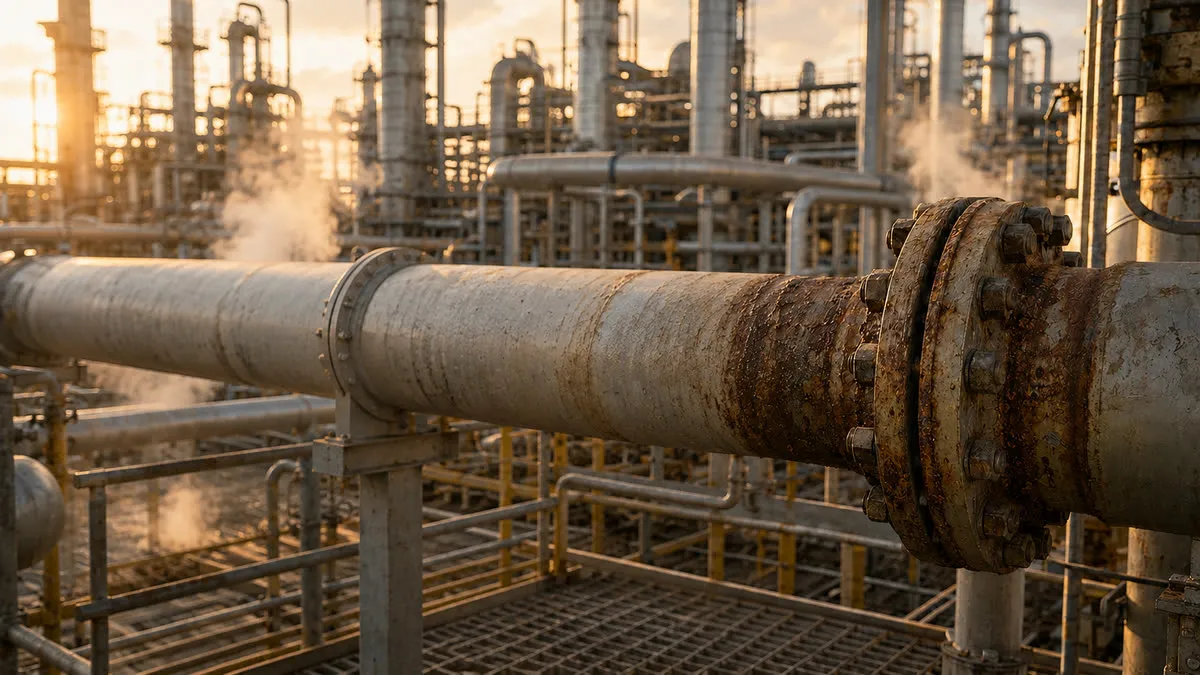
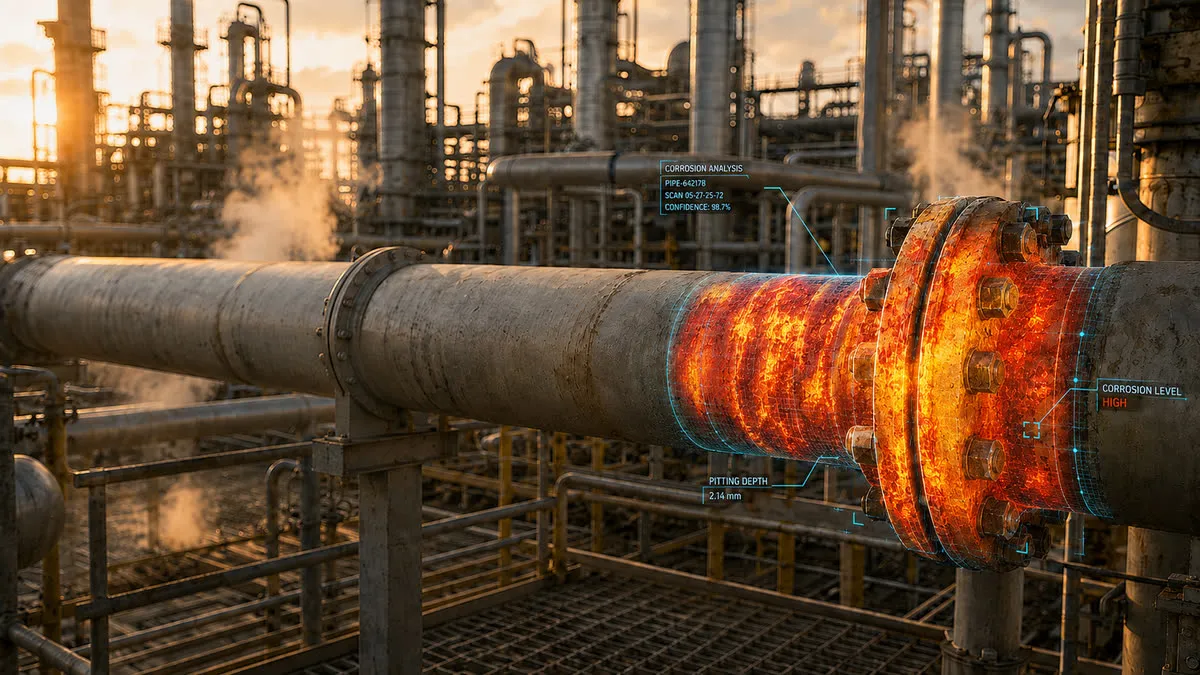
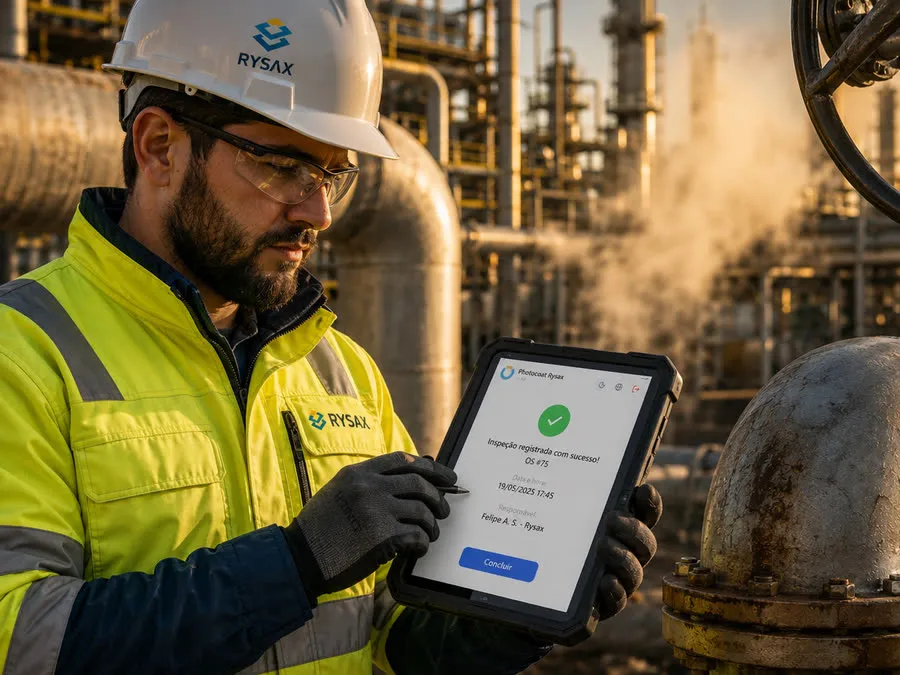
Your people photograph the asset on ordinary phones or tablets. Mark the area of interest and ask for the analysis, and the result comes back in seconds: the corroded area measured at pixel level, a severity map separating light from moderate from severe, the affected percentage, and a grade against ISO 4628-3 and ASTM D610.
It arrives with a confidence score, and with the original image, the detection and the severity map side by side, so your professional can see what the AI saw before agreeing with it. Nothing is final until they do. The result is a proposal until an inspector validates it, and the report carries their name and the technical responsible beside it.
AI speeds it up. Inspectors make the call.
No special hardware, no new field procedure, no interruption to the operation.
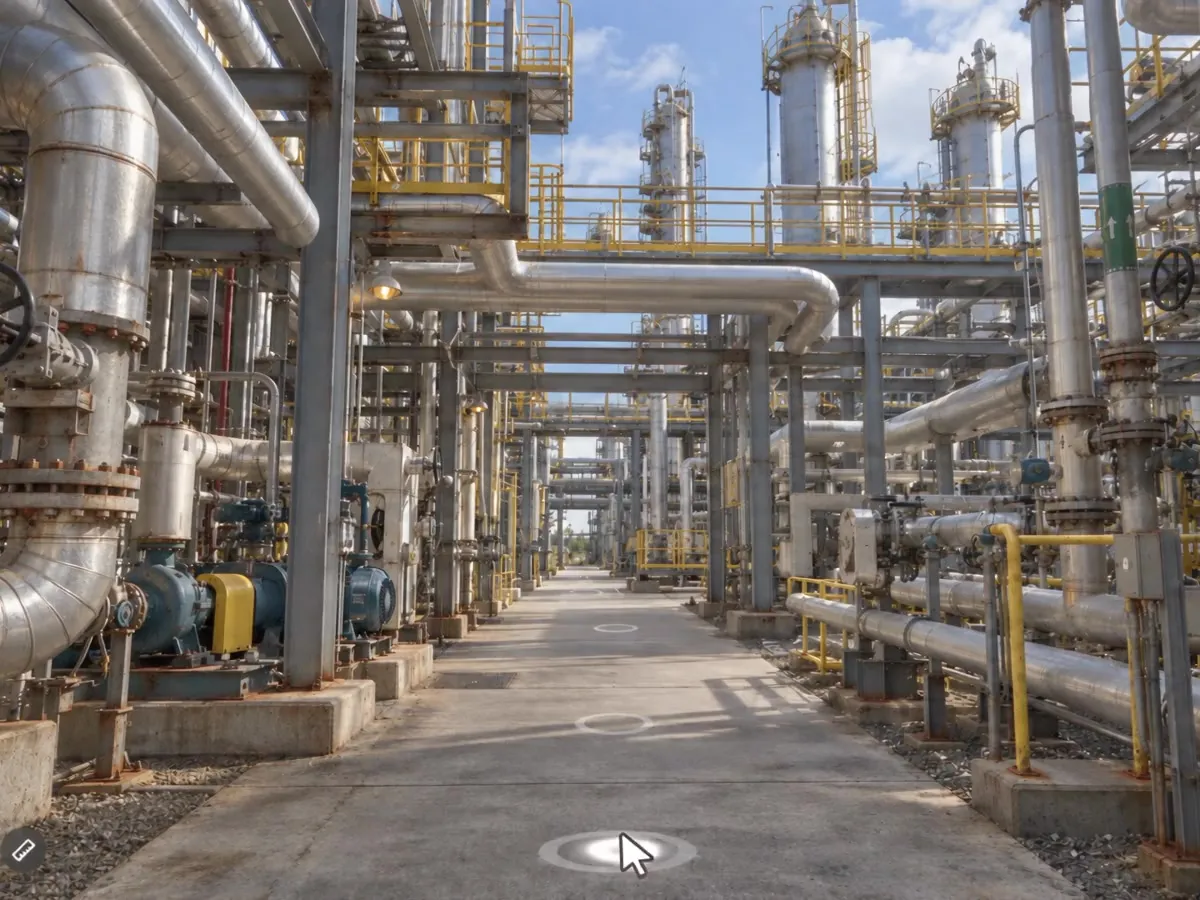
Level two: virtual tours, the asset walkable from a desk
Add an immersive 360-degree capture of the asset, which our team creates for you, covering up to 13,000 sq ft (about 1,000 m2) in a single day. A large unit becomes a navigable tour of well over a hundred scenes, with a plan showing where each one was taken, so anyone can move through the asset without going to it.
The findings live inside the tour. Open a scene and the corrosion reports raised there are pinned where they were found. Open one and the analysis is in place: the measured percentage, the severity map, the inspector's comment, and the component it belongs to in your own asset hierarchy. From that same panel, you raise the work order.
That last part is worth pausing on. The distance between somebody seeing corrosion and somebody being assigned to fix it is normally a report, an email and a meeting. Here it is one screen.
Assessment also stops being an event and becomes something you can consult. An assessment made on-screen can be revisited, reviewed and second-opinioned without another trip to the field, and it stays recorded where the component is. And an assessment a contractor reported can be checked by you, on the same screen.
Level three: the digital twin, where the asset becomes the interface
Add a 3D model and the program stops being organized by folders and starts being organized by the asset itself. Open a unit and its condition is the first thing you see: components color-mapped by condition, critical areas standing out from everything around them, the whole structure readable before anyone has clicked on anything.
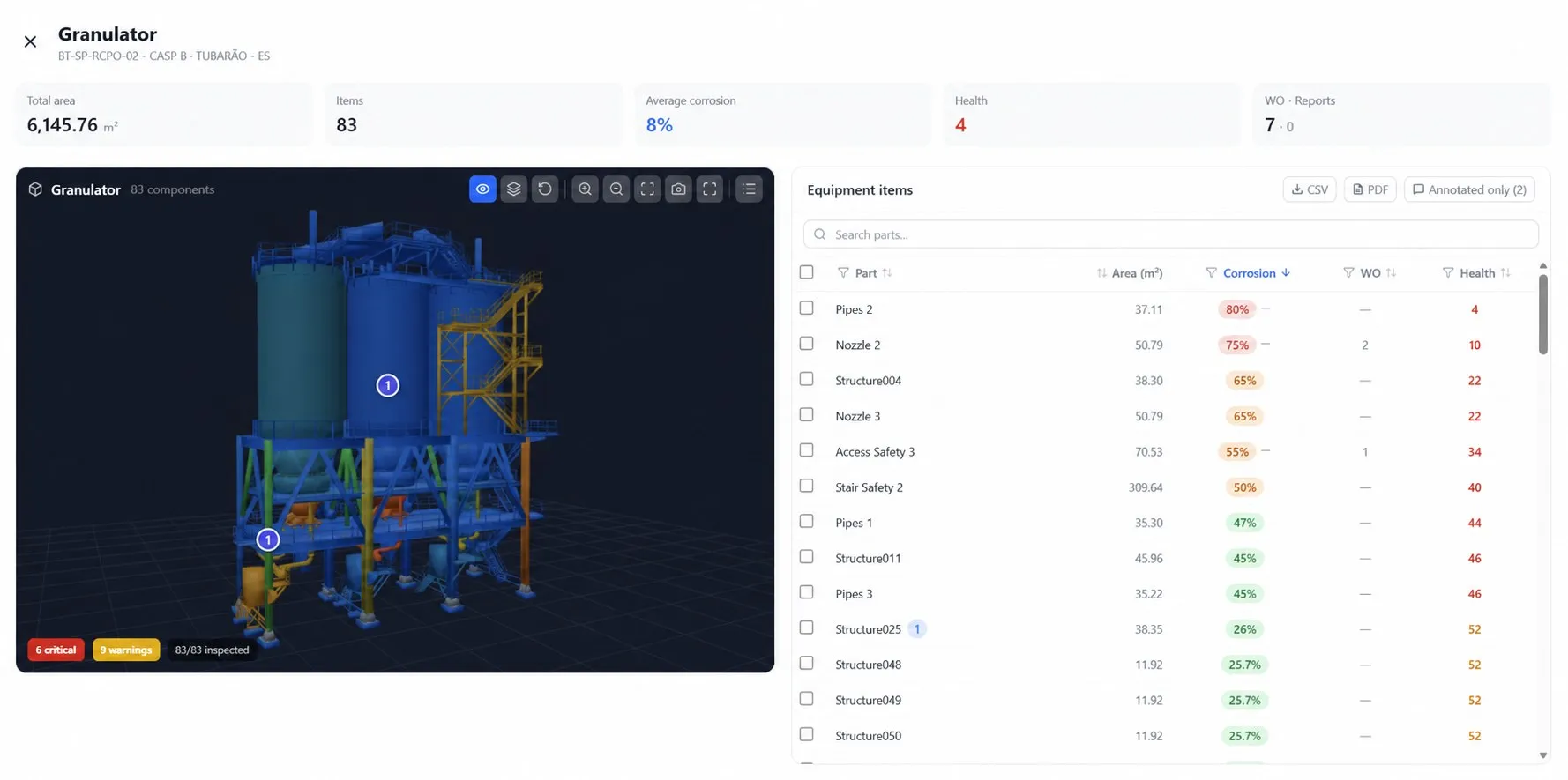
The asset's own numbers, at the top of the screen. Total surface area, how many components it contains, average corrosion across them, a health score, and how many work orders are open against it. That total area is the number your budget starts from, and it comes from the geometry rather than from somebody's walk.
Triage before detail. How many components are critical, how many need attention, and how much of the asset has actually been assessed, so nobody has to wonder whether the picture in front of them is complete.
Every component carries its own record: its measured surface area, its corrosion percentage, its condition grade, its health, the work orders open against it, who assessed it, when, and how it has evolved since.
Sort and filter the whole asset by any of it. Worst corrosion first. Largest surface area first. Lowest health first. Only the components someone has flagged. Priorities rank themselves instead of being ranked by whoever argues hardest.
Work orders live where the work is, pinned to the exact component and counted against it, so a unit's open workload is visible without opening another system.
And it leaves the platform when you need it to. Export the component list to a spreadsheet when you are building the budget, or the whole assessment to PDF for the contract file and the audit.
And we build the model ourselves: scanning, modeling and the twin, one team end to end. It gets built in parallel with whatever your teams are already doing, so nothing waits on it. When it arrives, everything already recorded finds its place on it.
Now the whole organization can see the site's health on screen, including criticality, risk, cost, and predictability.
You become the person who can defend the number.
The scope, the treatment decision and the deferral list all end up in the same room, and someone asks how you know. The answer is on one screen: the asset's measured area, how many components are in it, how many of them have been assessed, and which ones are critical. Every line traces to a graded condition, a measured area and a date. The components you deferred are on record with the condition they were in, which is next year's business case written this year rather than rebuilt from memory the week before the meeting.
The same record answers the questions that arrive later. When the audit comes, it is already there. When a coating fails early, the execution record says where to look, what preparation was done, which coats went on, by whom, and in what conditions on the day.
And it outlasts you in the role. The person who takes over the program inherits a history per component instead of a folder of photographs and a predecessor's judgment.
PhotoCoat does not just sharpen your judgment. It makes your judgment defensible, and it keeps it.
We do not ask you to replace anything.
Your integrity management, maintenance and work-management systems keep doing what they do. Consider what they hold today about coatings: a work order that says paint the pipe rack. Not the square footage in scope. Not the condition grade that justified doing it. Not the preparation standard, which is the single largest cost variable in the job. Not the coating system, meaning which paint in how many coats. Not the date it was last coated, or by whom.
PhotoCoat produces exactly that layer and exports in formats those systems accept. When a deeper integration is worth building, we scope it to your systems as part of the project.
Frequently asked questions
Do we need a 3D model or laser scanning to start?
No. PhotoCoat runs on photographs from ordinary phones from day one. Virtual tours are the natural second step, and the digital twin is the full experience, built in parallel whenever you choose.
Does the AI replace our inspectors or coating specialists?
No. The AI detects, quantifies and organizes; your professionals validate every result before it becomes part of the record, and the report carries their name. It makes your specialists faster and lets the ones you have cover more assets, particularly through remote assessment.
Which standards does it work to?
Condition grading follows ASTM D610 or ISO 4628-3, with SSPC-VIS 2 as the pictorial reference, and reports are structured for the standards your auditors use, including ISO 12944.
Which industries and environments is this for?
You name it. Refineries and petrochemical units. Terminals and tank farms. Steel, mining, pulp and paper. Ports and heavy infrastructure. Power generation. Offshore units and their topsides, where access is the most expensive part of every inspection and remote assessment pays for itself fastest. The common denominator is not the industry: it is an asset large enough that nobody holds its coating condition in their head, in an environment aggressive enough that being wrong about it is expensive. ISO 12944 classifies those environments from C1 up to CX, plus immersion categories Im1 to Im4. At C4 and above, the coating is not a finish. It is the barrier.
Can a photograph really tell us whether to overcoat or fully remove?
No, and we will not claim it can. That decision turns on whether the existing film will hold a new system, which is answered by adhesion and patch testing on the asset. What PhotoCoat does is tell you precisely where that testing needs to happen and how much surface is in play, so the field work is targeted instead of exploratory, and so the result gets recorded against the component it belongs to.
Our painting contractors do the field work. How does that fit?
Either way you prefer. Your own teams can run PhotoCoat, your contractors can run it and you receive the records, or both work the same asset in the same platform. What changes in every case is that the measurement exists independently of the invoice, so both sides are arguing from the same record.
Can we start with one asset?
Yes. And if you would rather start across a site, a region or a fleet, that works too: the platform does not change shape with scale, and neither does our team.
How long does deployment take?
Less than you might fear, and you will not do it alone: we onboard your team side by side, starting on real work. Scope defines the timeline, and we give you a realistic one before you commit.
Who owns the data and the model?
You do. The records, the reports, the 3D model: all of it is yours, in usable formats. That is true across everything Rysax delivers.
What does it cost?
A subscription that scales according to your needs. Bring a real asset and we will scope it together, which is also the fastest way to find out what the program is worth before committing at scale.
Next year's budget could start from a record.
Book a demo and bring a real coating problem: a unit, a structure, a budget line that comes back every year. We will show you what its condition looks like measured, and what the budget conversation looks like with evidence behind it. Real people, real coating experience. No chatbots.